
Short answer: start with a mid-sized set of Prismacolor Premier or Faber-Castell Polychromos if your budget allows it, Derwent Coloursoft if you want something in between, or a student grade set like Faber-Castell Goldfaber on a tighter budget. Pair any of them with decent paper and a gentle hand, and you will be drawing well before you finish the first sketchbook.
I spent six years behind the counter of an art supply shop in Asheville, and “what colored pencils should I buy?” was a question I answered about a hundred times a month. People would come in with a screenshot from a YouTube video, a gift card, and a look that said “please just tell me which box to grab.” The best colored pencils for beginners are the ones that lay color smoothly with light pressure, come in a range of primary and neutral colors, and don’t punish you for being new. That rules out some very cheap pencils and some very expensive ones.
I don’t sell anything here. Art Supply Shelf has no store, no affiliate links, no sponsored reviews. I test the cheap stuff so you know when it is good enough, and when it is not. By “beginner,” I mean adults returning to drawing after years away, hobby colorists working through adult coloring books, and teens serious enough about art to outgrow school supplies but not yet selling work.
Choosing the wrong pencils matters more than people think. A set that feels scratchy or pale makes you believe you lack talent when the real problem is the tool. A set that snaps every time you sharpen it makes you give up. Below, I will walk through how I chose my recommendations, review five sets in detail, give you a quick comparison, and end with a simple “if this, then that” guide so you can stop researching and start drawing.
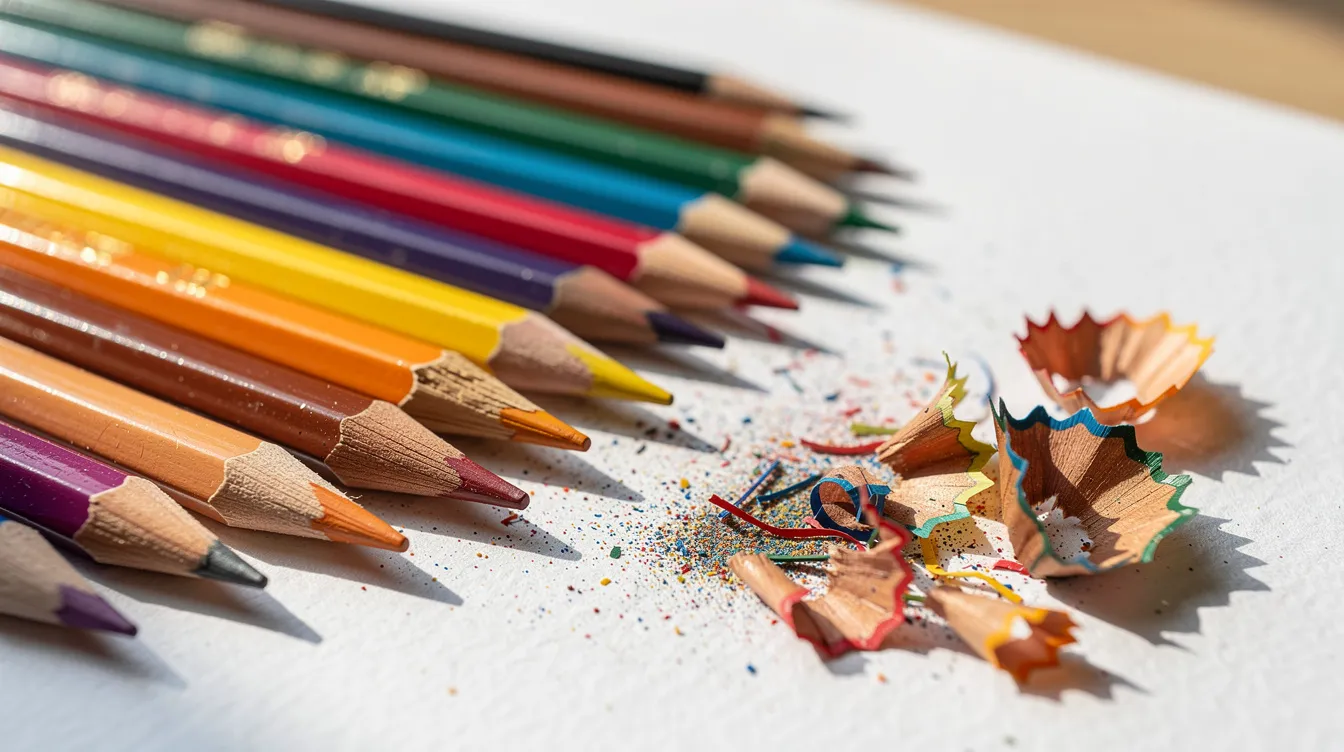
How I Chose the Best Colored Pencils for Beginners
I narrowed the huge market down to a handful of sets that make learning less frustrating, not just the ones with the fanciest labels. I focused on pencils widely available in 2026, whether in big-box craft chains, art stores, or common online retailers, and I skipped obscure imports that would be hard to reorder.
Here is what separates a good pencil from a bad one. A colored pencil is pigment held together with a binder, usually a mix of wax and oil in varying ratios. Cheap pencils tend to have less pigment and more filler, so you end up pressing hard, getting a pale scratchy line, and watching the paper stop taking color after two layers. A higher pigment load means richer color with less pressure required. The waxy shine people complain about is often the paper’s tooth filling with binder before it fills with color.
Artist grade colored pencils have richer pigmentation than student grade pencils. Student grade pencils are generally more affordable, and for many beginners that trade-off is perfectly fine. But knowing the difference helps you understand what you are getting.
Core Criteria I Used
-
Ease of use. Soft enough to lay color without pressing hard, but not so mushy that tips snap constantly. Durable pencils resist snapping and require less maintenance, which matters when you are still learning how much pressure to use. Soft cores in colored pencils allow easy application of color, and that ease is what keeps beginners drawing instead of frustrated.
-
Blendability. How smoothly colors layer and mix, especially for simple gradients and shading. Blending creates smooth transitions between colors, and layering is essential for effective blending with colored pencils. Better pencils lay down rich color with light pressure and let you build several layers, which is where colored pencil art gets its depth. Use light pressure to start blending, then add more as you build.
-
Color range. Enough useful colors in starter sets without filling the box with duplicates and gimmicky shades. A set of 12 to 36 colored pencils is often sufficient for beginners, giving you two or three versions of each main hue plus browns and grays. Beginner pencils should have a range of primary and neutral colors. Sets of 12 are thin for skin tones and landscapes, and sets of 72 or more leave many pencil colors unused in the first year. Layering blue over yellow to get green teaches more than grabbing a pre-mixed green.
-
Availability and price. Can a beginner actually walk into a store or order them easily? I tried to keep recommendations roughly under $20 for budget picks and under $40 for mid-range, with one artist grade option for those ready to invest more.
-
Learning curve. How forgiving they are with sharpening, pressure, and cheap paper. Beginners rarely start on perfect materials, and a pencil that only works on premium paper is not a great first pencil.
-
Upgrade path. Some brands sell individual pencils as open stock, so you can replace your favorite blues without rebuying the whole set. Artist grade pencils are often available open stock for individual purchase, and that flexibility matters as your skills grow.
What I Didn’t Prioritize (Yet)
For beginners, I did not weight lightfastness heavily. Lightfastness rates how colors hold up over time, and it is crucial for artists selling their work or framing pieces to hang under a window. But for sketchbooks, practice sheets, and coloring books, it is a secondary concern. Student grade pencils typically have lower lightfastness ratings than artist grade, and that is acceptable when you are learning.
For reference, lightfastness is measured on scales like the ASTM lightfastness scale, which ranges from I to V, where Lightfast I indicates colors last 100 years in low-light conditions. There is also the Blue Wool scale, which ranges from 1 to 8 for lightfastness. Some brands take this very seriously: Derwent Lightfast pencils are rated Lightfast I or II, meaning Derwent Lightfast pencils are rated for 100 years of lightfastness. They are oil based and lightfast rated, aimed at professional artists who need archival permanence. Caran d’Ache Luminance pencils have 61 colors rated LF1, placing them among the most lightfast colored pencils you can buy. Artist grade pencils can last over 100 years under museum conditions if you choose the right pigments.
The Wikipedia entry on colored pencils is a fair overview if you want to understand how artist and student grades differ, including lightfastness ratings and color range.
I also did not pick the most expensive artist ranges like Caran d’Ache Luminance as “beginner defaults,” but I reference them as future upgrades. I skipped novelty sets (pure metallics, neons, glitter) in favor of practical everyday color ranges.
One warning: be wary of bargain sets with 150 colors in a zippered case. The color count is the selling point, and the cores are usually where the savings came from. Twenty-four good pencils beat 150 weak ones every time.
Best Colored Pencils for Beginners in 2026: My Top Picks
After comparing testing results across the landscape, I settled on five main contenders that cover different budgets and goals. Here are the five colored pencil sets I recommend most often to beginners. Each review follows the same subheadings so you can skim and compare.
Before I get into them, a few other pencils I sold often and genuinely like, but that did not quite make the five: Derwent Coloursoft, which is soft and smooth, sitting between Prismacolor and Polychromos in feel with less fragility than Prismacolor. Prismacolor Scholar, the harder, less pigmented student line, which is a fine budget way to learn layering and pressure control. Koh-i-Noor Polycolor, an oil based option for people who want that firmer feel without the Polychromos price. Caran d’Ache Pablo colored pencils, another solid oil based choice from a Swiss maker known for quality. And Staedtler Ergosoft, with its triangular barrel that some people find more comfortable to hold for long sessions. Any of these could have been on the list on a different day.
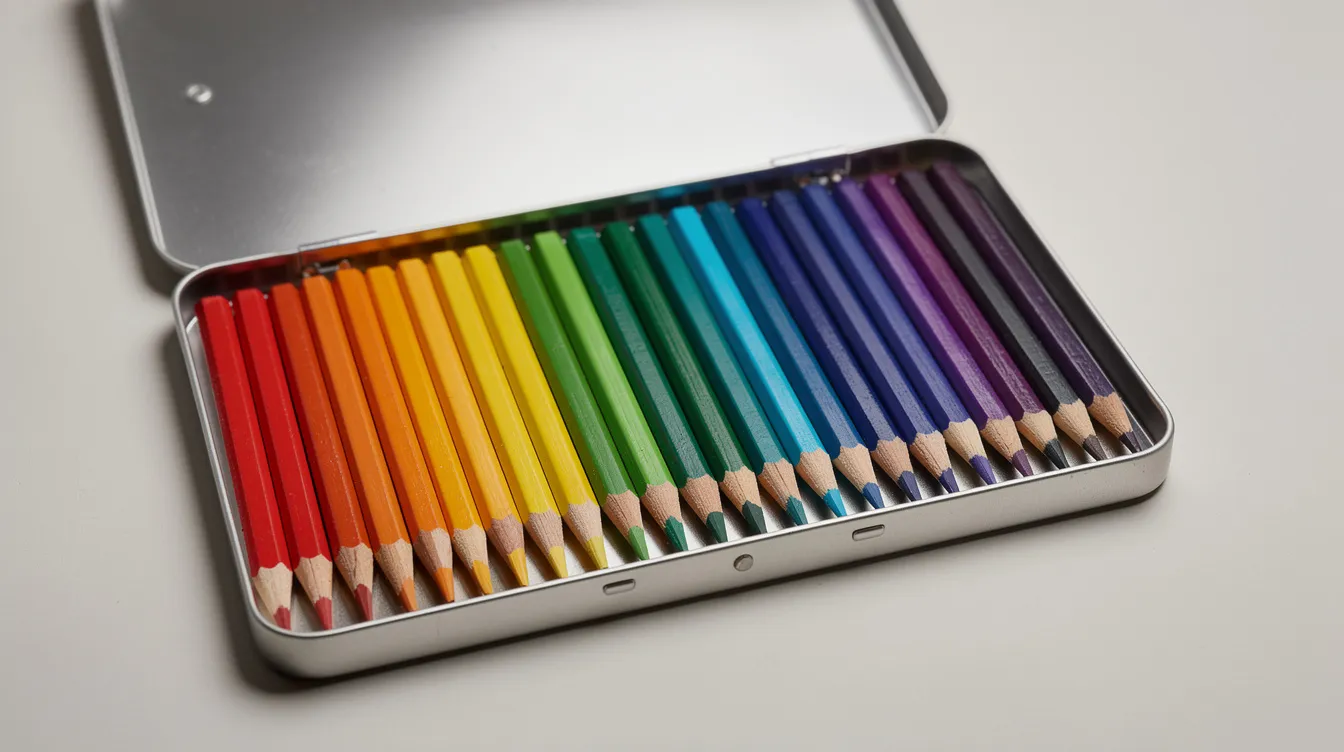
1. Prismacolor Premier Soft Core: Best All-Around for Serious Beginners
Prismacolor Premier is the pencil most beginners fall in love with. The soft core colored pencils come in sets ranging from 24 (around $20 to $25) to 48 (around $35 to $50) to 72 (around $70 to $75), with the full line stretching to 150 colors. Art teachers recommend them constantly, and for good reason.
Why It Stands Out
Prismacolor Premier pencils are wax based and vibrant, with a creamy laydown that rewards even a gentle touch. You get intense color on the first stroke, which is genuinely motivating when you are just starting. Creamier pencils blend more easily than firmer ones, and Prismacolor pencils are the textbook example. On mid-weight sketchbook paper or a mixed media pad, very few strokes produce real saturation. Prismacolor Premier pencils are known for vibrant colors, and that reputation is earned.
Burnishing is a blending technique that smooths colors together by pressing firmly in the final layer, and these premier colored pencils respond to burnishing beautifully, giving you that polished, almost painterly finish.
Best For
-
Adult coloring book fans who want vivid, saturated pages. Prismacolor Premier pencils are recommended for coloring book enthusiasts specifically because of how quickly they fill space with rich color.
-
Beginners learning portraits, botanicals, or general shading.
-
Students in high school art classes.
-
People who can invest a moderate budget and want something that feels like real artist supplies without jumping to top-tier prices.
Key Strengths
-
Very soft cores and highly pigmented color that shows up even with light pressure.
-
Easy blending, layering, and burnishing on most paper types.
-
Huge amount of pencil colors available, up to 150, so you can find exactly the same color you need for any project.
-
Widely available in craft chains, art stores, and online.
-
They still perform decently on smoother mixed media pads, which are common beginner paper.
Possible Limitations
-
Lead breaking is a recurring complaint. The soft cores snap if sharpened aggressively, dropped, or used with electric sharpeners.
-
Wax bloom can appear on heavy applications, showing up as a cloudy film days after you finish a drawing.
-
Some colors have weaker lightfastness, which matters if you later frame work.
-
The softness can frustrate heavy-handed beginners who like a very sharp point, since the tips wear quickly.
Here is a story from the shop. A teenager came in with her mom, holding a Prismacolor Premier pencil that had snapped inside the wood for the third time in a week. She was convinced the set was defective. She had been using an electric sharpener, cranked hard, every time the point dulled. I switched her to a small manual sharpener and showed her how to turn the pencil gently instead of forcing it. A month later she came back for open stock refills of her favorite blues, not a replacement set. Soft cores need a little care, and then they are a joy.
2. Faber-Castell Goldfaber / Goldfaber Aqua: Best Balance of Control and Softness
Goldfaber is Faber Castell’s mid-range student line, aimed at hobbyists and learners who want better quality pencils than school supplies without paying artist grade prices. Sets of 24 to 48 are common in U.S. art chains, and they fall comfortably in the moderate price range.
Why It Stands Out
The cores are firmer than Prismacolor, with a 3.3 mm diameter that holds a good point and lays down color with a slightly drier, more controlled feel. This firmness helps beginners learn detail work, hatching, and crosshatching without instantly flattening the tooth of the paper. They are a bit softer than other pencils in the oil based category, making them more forgiving than a full artist grade line.
Best For
-
Sketchbook people who like line-and-color drawing.
-
Learners who tend to press hard and break softer pencils.
-
Parents buying for a keen teen who outgrew kids colored pencils and school supplies.
-
If you grab the Goldfaber Aqua version, it suits beginners curious about watercolor pencils but not ready for pro sets. The water soluble cores let you brush water over your drawing for a painted effect.
Key Strengths
-
Sturdy barrels that sharpen easily in cheap handheld sharpeners.
-
Reliable color consistency across the range.
-
Reasonable lightfastness for the price.
-
Common set sizes (12, 24, 36, 48) at student grade prices.
-
Less wax bloom than softer pencils.
Possible Limitations
-
They feel less “buttery” than Prismacolor, so super-smooth blends take more layers and patience. You will not get the same results with one stroke that you would with a soft core pencil.
-
Open stock can be harder to find than pro lines in some regions.
3. Castle Arts Soft Series: Best Online Set for Budget-Conscious Beginners
Castle Arts is a brand most beginners encounter when browsing online marketplaces rather than walking into an art store. I tested these with that audience in mind: people who want a generous set of colors without spending a huge amount of money.
Why It Stands Out
For the price, the cores are decently soft and pigmented, sitting somewhere between Crayola and Prismacolor in quality. They come packaged with clear color names and numbers printed on each pencil, which is genuinely useful for following tutorials. The tin presentation is appealing and can motivate new artists to keep drawing.
Best For
-
People ordering their first real set online.
-
Adult coloring fans who want more than school pencils but are watching their budget.
-
A gift set for beginners where budget matters more than archival quality.
Key Strengths
-
Generous set sizes up to 72 or 120 at low per-pencil cost (a 72-count set runs about $42 to $60).
-
Reasonably smooth blending on mid-range paper.
-
Consistent cores with fewer random duds than some ultra-cheap colored pencils.
-
Pre-sorted color families that help beginners navigate the range.
A smaller set is the smarter buy here. The biggest sets lean toward the “150 colors” trap I described earlier, where the color count is the selling point and many shades go unused.
Possible Limitations
-
They are only sold in sets, not open stock, so replacing one pencil means buying a whole tin again.
-
No formal lightfast ratings are published.
-
Variable availability in local stores. They are mostly mail-order.
-
Some colors can be inconsistent in color intensity, with occasional pale or chalky shades in larger sets.
4. Crayola Colored Pencils: Best Rock-Bottom Budget & Kids-at-Heart Choice
I am talking about standard Crayola colored pencils here, not the higher “Signature” line. These are the pencils you probably used in grade school, and they still have a role as a gentle starting point. They are not crayons, though the brand is famous for those too.
My honest take is that they are fine for very casual coloring but hard and low on pigment, so anyone serious about learning should step up to a student grade art brand for not much more money.
Why It Stands Out
Virtually everyone can find them locally for a few dollars, and they are a low-pressure way to warm back up to drawing. They sharpen easily, survive drops, and teach pressure control because their firmer cores demand that you work for your color.
Best For
-
Absolute beginners not ready to invest.
-
People buying for kids who might lose pencils.
-
Folks testing whether they even like colored pencils as a medium before spending more.
Key Strengths
-
Affordability: sets of 36 to 50 cost under $15 to $20.
-
Available everywhere, from grocery stores to big-box retailers.
-
Durable cores that resist snapping.
-
Familiar feel from childhood.
-
They work fine in ordinary sketchbooks and on cheap printer paper for simple practice exercises.
Possible Limitations
-
Lower pigment load means difficulty achieving rich dark tones and vibrant colors.
-
Layering and blending are hard because the firm pencil lead does not deposit enough pigment per stroke.
-
Weak performance on black paper or toned paper.
-
Not a good endpoint for someone serious about realistic portraits or detailed colored pencil art. They are cheap pencils in the meaningful sense: cheap colored pencils that do cheap work.
5. Faber-Castell Polychromos: Best “Beginner-to-Long-Term” Investment
Faber-Castell Polychromos are truly artist grade, and some beginners with the budget prefer to start directly with the set they will grow into rather than buying twice. They feel less buttery than Prismacolor at first, but they are consistent and sturdy, and a smaller set is a sensible way in.
Why It Stands Out
Faber-Castell Polychromos are oil based and matte, with firm 3.8 mm cores that take many layers without wax bloom. Faber-Castell Polychromos pencils are popular for their layering ability, letting you build color slowly and deliberately. The brand publishes lightfastness ratings on every single pencil, which no budget brand does. The full range runs to about 120 colors.
Best For
-
Highly motivated beginners who know they will stick with drawing.
-
College art students building a core kit.
-
Adults returning after a long break and ready to invest once.
-
People who like detail, small drawings, or botanical work where holding a sharp point matters.
-
Advanced artists looking for a workhorse set, and professional artists who need archival quality.
Key Strengths
-
Excellent point retention and clean lines for detail.
-
Exceptional layering capacity. You can put down six or seven layers and still add more.
-
Very good open stock availability. You can walk into most art stores and buy individual pencils to replace only what you use.
-
Respectable lightfastness, making them suitable for work that might be framed or sold.
-
No wax bloom, even on heavy applications.
Possible Limitations
-
Higher price per pencil compared to mid-range sets. A 36-count set runs around $60 or more, and mistakes can feel costlier psychologically.
-
On cheap, very smooth paper they can feel a bit hard and scratchy. They like at least basic drawing or mixed media paper with some tooth.
-
Achieving full saturation takes more layers than with softer pencils, which can feel slow to beginners expecting instant results. You will not get the same results as with Prismacolor on the first pass.
-
The firmer, harder lead does not blend as effortlessly, so you need patience and technique.
Quick Comparison of the Best Beginner Colored Pencils
If you are still deciding, here is the short version:
-
Prismacolor Premier Soft Core: Best all-around for beginners who want creamy blending and vivid color, especially for coloring books and portraits.
-
Faber-Castell Goldfaber: Best for learners who like control, sharp points, and sketchbook-style drawing on a moderate budget.
-
Castle Arts Soft Series: Best online budget set with lots of colors for hobbyists who enjoy filling whole pages with color.
-
Crayola Colored Pencils: Best ultra-cheap starting option for testing the waters or buying for kids and absolute beginners.
-
Faber-Castell Polychromos: Best “buy once and grow into it” set for beginners who know they want to pursue colored pencils seriously.
Other brands worth looking at as you grow: Derwent Drawing pencils for warm, earthy tones, Derwent Lightfast for archival work, Caran d’Ache for premium Swiss quality, and Lyra Rembrandt Polycolor as a more affordable oil based alternative.
How to Choose the Right Colored Pencils as a Beginner
There is no single “correct” first set. The best choice depends on your budget, your paper, and what you actually plan to draw. This section translates the reviews above into practical decision rules.
Choose Based on Your Budget
Very tight (under $15): Crayola gets you started today. It is not the best tool, but it is the best tool for zero risk.
Moderate ($20 to $40): Faber-Castell Goldfaber or Castle Arts give you quality pencils with enough color range to learn real technique. This is the sweet spot for most beginners.
Generous (above $40): Prismacolor Premier 48 or a smaller Faber-Castell Polychromos set. These are expensive pencils relative to school supplies, but they reward you with better color, smoother blending, and a set that lasts.
Whatever you spend on pencils, leave room in your budget for a decent handheld sharpener and at least one sketchbook or pad that works well with colored pencils. A $5 sharpener and a $10 drawing pad will change your experience more than upgrading from a 48-count set to a 72-count set. If you are still putting together the rest of your kit, my guide to what art supplies you actually need to start drawing covers the full list.
If you cannot decide between Prismacolor and Polychromos, buy one or two open stock pencils of each and try them side by side. Once you know which colors you burn through, buy those as individual pencils rather than rebuying full pencil sets.
Choose Based on How You Like to Draw
This is where wax versus oil matters. Wax based pencils like Prismacolor Premier are softer and easier to blend, which feels rewarding right away. Oil based colored pencils like Polychromos have a harder core than wax based pencils, hold a sharp point longer, and are less prone to wax bloom, the hazy whitish film that can rise on heavily layered wax drawings. Loose, rich, blended color suggests wax. Detail, small drawings, or botanical work suggests oil. Neither is wrong, and plenty of artists mix both in one drawing.
Here is a good point to remember: “wax based” and “oil based” are not pure categories. Almost all dry colored pencils use both wax and oil in their binders, just in different ratios. What you are really choosing is how hard or soft the core feels and how it behaves on paper.
Match your preference:
-
Slow, detailed drawing: Firmer, controlled sets like Goldfaber or Polychromos. Their harder lead holds fine lines.
-
Relaxed coloring, filling areas: Softer pencils like Prismacolor or Castle Arts. They are a bit softer across the board and deposit color quickly.
-
Sketching with line plus light color: Goldfaber or even Crayola, paired with a good graphite pencil for your layout.
-
Portraits and botanicals: High blendability matters. Prismacolor is strong here.
-
Urban sketching: Pencils that hold a sharp point and work well alongside ink. Polychromos or Goldfaber.
Choose Based on Paper and Workspace
If you are mostly using cheap office paper or thin coloring book paper, super-soft pencils can dent or buckle pages more easily. Firmer pencils like Goldfaber or Crayola handle very thin paper better. Softer sets like Prismacolor and Castle Arts shine on thicker sketchbooks or mixed media pads.
A good set on thin copy paper will disappoint you. Colored pencils need the right paper: something with some tooth and enough weight to take several layers without buckling or pilling. Medium-weight drawing paper enhances colored pencil performance dramatically. A basic drawing pad like Strathmore 400 Series is a big upgrade over generic sketch paper for color work. Aim for at least 160 to 190 gsm.
Practical concerns matter too. Tins protect pencil tips better than cardboard boxes if you travel. Sturdier barrels survive being tossed in a bag. And make sure your sharpener fits your pencil diameter. Not all sharpeners handle thicker artist grade barrels well. For the graphite layout underneath, my guide covers which drawing pencils a beginner should buy.
Which Set Should You Start With?
If you have read this far and still feel stuck, here is the simplest version:
-
Choose Prismacolor Premier if you want the easiest blends and plan to spend most of your time coloring or shading smoothly. It is the only colored pencils set on this list where one pencil can cover a large area with intense color in a single pass.
-
Choose Faber-Castell Goldfaber if you like crisp lines, draw in sketchbooks, or tend to press hard on the page.
-
Choose Castle Arts Soft Series if you want a big set of colors for a modest price and do most of your art at home.
-
Choose Crayola Colored Pencils if you are brand new, on a strict budget, or buying for kids and just want to get started today.
-
Choose Faber-Castell Polychromos if you know you are in this for the long term and want a set that will carry you from beginner to advanced.
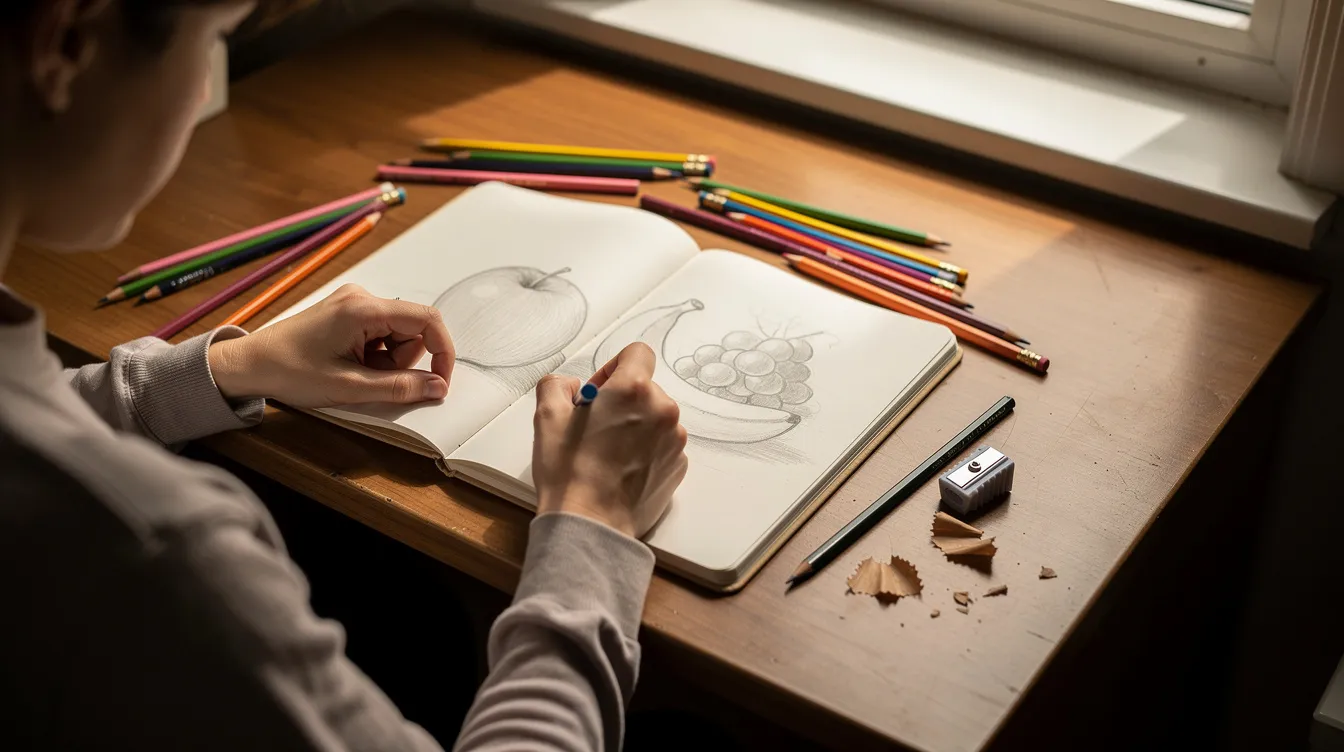
Final Thoughts: Your Pencils Are Only the Beginning
The best colored pencils for beginners are the ones that make you excited to keep drawing, not the ones with the most impressive label on the tin. Upgrading later is easier than waiting forever for the “perfect” set. Start with something good enough, and let your hands teach you what to buy next.
The pencils are only half of it. Most people who tell me their pencils “don’t work” are pressing hard on the first layer, which flattens the paper’s tooth and leaves nowhere for the next layer to go. Light pressure, many layers, and patience will get you farther than any brand upgrade. If you read through every preview post reply on any colored pencil forum, you will see the same advice repeated by people who draw beautifully: build light, layer slowly, let the paper do its job.
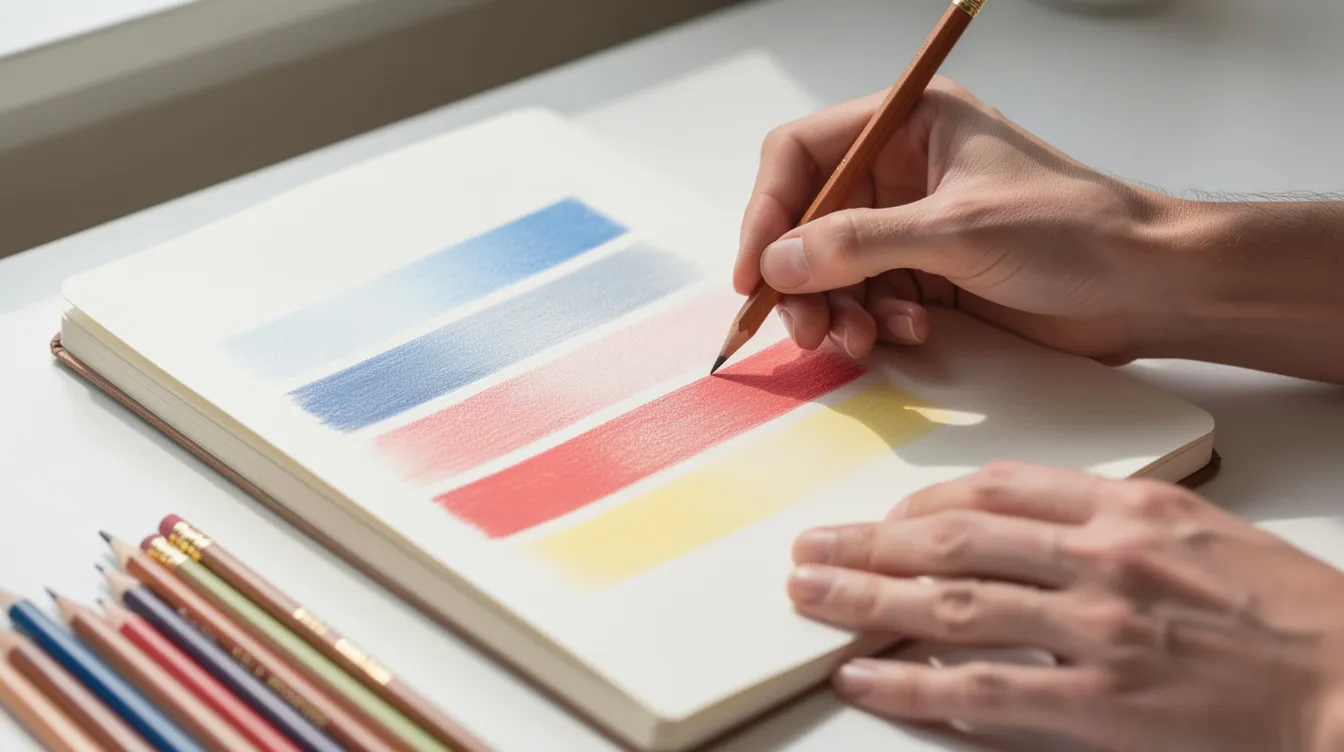
Once you have your pencils, try three simple exercises before you start a “real” drawing. First, make a gradient strip: pick one color and go from the lightest whisper to the darkest press you can manage. Second, layer two colors over each other and see what happens. Third, try blending a warm color into a cool one and find the transition point. Any of the sets on this list can handle these exercises, and doing them will teach you more in twenty minutes than reading another ten articles.
For readers who want a structured next step, Lisa’s colored pencil course at her drawing academy covers pressure, layering, and blending in a way I genuinely admire. I have sent friends there when they were stuck at the “everything looks flat” stage, and they came back drawing with real depth. If you want a complete colored pencil foundation, that is where I would send you first.
Your first box of colored pencils is a permission slip to draw badly, often, and with curiosity. Grab the set that fits your wallet and your mood, sharpen one pencil, and fill a page. That is how every good drawing starts.
FAQ
Are Crayola colored pencils good enough for a beginner?
They are fine for very casual coloring, but the cores are hard and low on pigment, so layering and blending are difficult. You can learn pressure control and basic color selection with them. But for serious learning, a student grade set from an art brand like Goldfaber is a noticeable step up for not much more money. Crayola is best thought of as a testing-the-waters pencil, not an endpoint.
Should a beginner buy Prismacolor or Polychromos?
Prismacolor if you love soft, blendable color and can handle the pencils gently. Polychromos if you prefer detail, durability, and a matte finish. If you cannot decide, buy one or two open stock pencils of each from other brands you are considering and compare them on the same paper with the same subject. Many artists who work seriously end up using both types in the same drawing, using softer pencils for broad blending and firmer ones for fine lines.
Do I need a blender pencil or solvent?
Not right away. Learn to blend by layering first, using light pressure and building color gradually. A colorless blender pencil is a nice addition once you are comfortable, and solvents can wait even longer. Focus on core technique before adding tools.
Why do my colored pencils look waxy and shiny?
You have probably filled the paper’s tooth with heavy pressure, which flattens the color into a slick, burnished layer before you intended it. Use lighter pressure on early layers and try paper with more tooth. If a cloudy film shows up days later, that is wax bloom, a migration of excess wax binder to the surface, and a gentle wipe with a soft tissue usually takes it off. Oil based pencils like Polychromos are less prone to bloom, which is one reason some artists prefer them for heavily layered work.