
Buy three or four graphite pencils in grades HB, 2B, and 4B, plus a 2H if you like light guidelines. That is genuinely all you need for your first year of drawing. If you want a single brand to start with, pick up a Staedtler Mars Lumograph or Faber Castell 9000 in those grades. Practice matters more than the pencil, but a decent pencil makes practice feel better. If you are still deciding on the rest of your kit, read about what art supplies you actually need to start drawing.
Best Drawing Pencils for Beginners (Quick Answer)
I spent six years behind the counter of an art supply shop in Asheville, and the most useful thing I did for new artists was stop them from buying a twenty-pencil tin. A small 4 to 6 pencil starter set is ideal for beginners: one hard (2H), one balanced (HB), one soft mid-tone (2B), one darker (4B), and maybe a 6B later when you want deep contrast. A range of 2H, HB, 2B, and 6B is sufficient for beginners to practice line work, shading, and basic value studies.
Choosing a good-quality pencil set makes a noticeable difference for beginners, but it does not need to be expensive. My top all-around pick is the Staedtler Mars Lumograph for its smooth, consistent grades. On a tight budget, the Faber-Castell Goldfaber student line does the job without the gritty feel of generic school pencils. And if you want a treat-yourself option, a Mitsubishi Hi Uni in a few key grades is one of the smoothest graphite drawing pencils I have ever used.
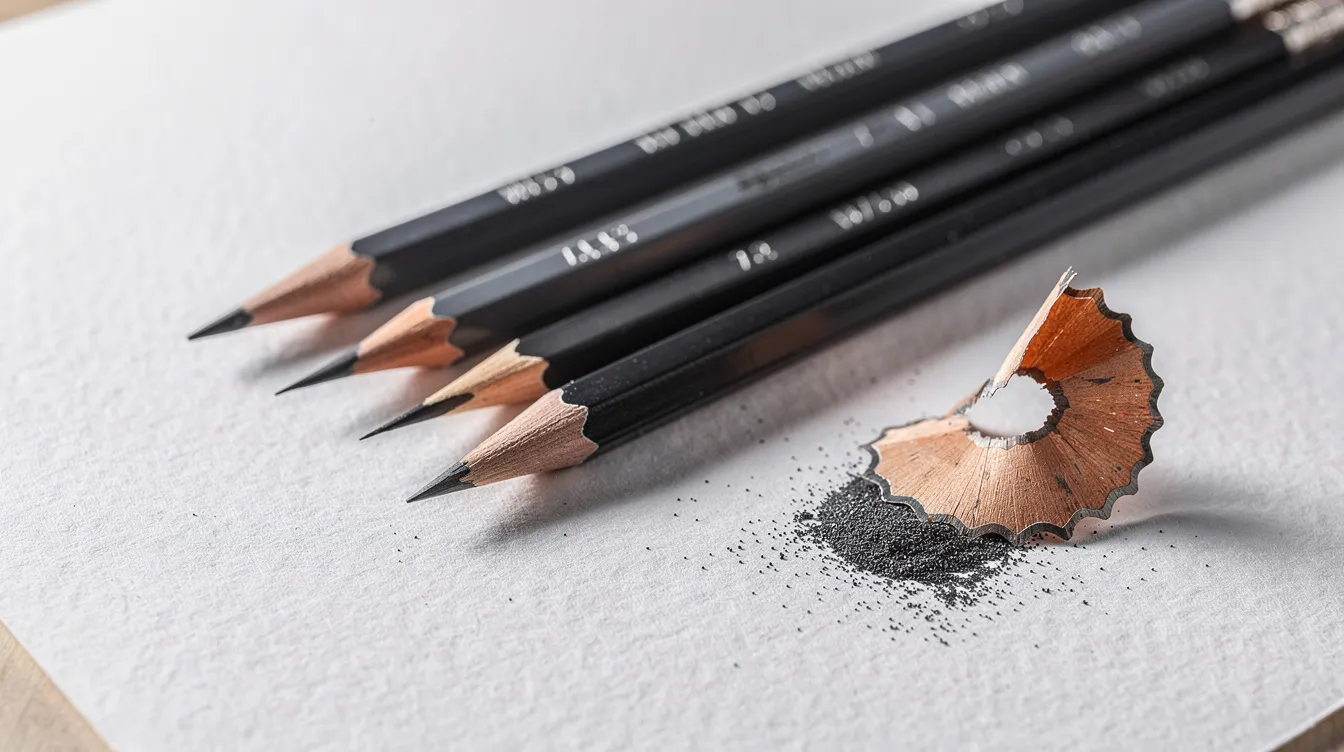
How I Chose the Best Drawing Pencils for Beginners
I test the cheap stuff so you know when it is good enough and when it is not. My picks come from six years of selling art materials, watching customers come back with feedback, and filling my own sketchbooks. I only considered graphite drawing pencils in standard wooden casings here. I left out mechanical pencils (most mechanical leads are too thin to shade with), woodless graphite pencils (they break when dropped), charcoal pencils (dustier and harder to erase), and colored pencils to keep this simple. If you plan to add color soon, graphite still earns its place for the light layout sketch you lift with a kneaded eraser before coloring. If color is your next step, see the best colored pencils for beginners.
Criteria That Matter When You Are Just Starting
Pencil grades range from 10H (hardest) to 12B (softest). H pencils contain more clay and produce lighter marks. B pencils contain more graphite and produce darker marks. The HB grade is in the middle of the pencil grading scale. That is the basic system, and it dates back to Nicolas-Jacques Conté à Paris, who patented the clay-and-graphite mixing process in 1795. For the full history of the pencil, see the Wikipedia article on pencils.
Here is the catch: there is no industry standard for pencil grade darkness or lightness. A Staedtler 2B and a Derwent 2B will not feel identical. A 3H pencil may function like an HB in softer ranges from another manufacturer. That is one reason to stick with one preferred brand while learning. Consistent hardness grades provide predictable and repeatable results, and jumping between other brands before you know what you like can confuse your sense of tone.
What I looked for:
-
Smoothness and laydown. Top drawing pencils for beginners combine smooth laydown and sturdy core bonding. Smooth graphite consistency makes mastering gradients easier. If the pencil fights the paper, you will think the problem is your hand.
-
Range of hardness. Beginner drawing pencils should offer a range of hardness levels. You need light values from harder pencils and dark values from softer grades. Harder pencils produce lighter lines while softer pencils create darker marks. 2B is ideal for everyday sketching and general drawing; 4B is suitable for deeper shadows and bold lines; 6B pencils produce very dark marks for strong contrast.
-
Break resistance. Break-resistant leads reduce frustration when sharpening or applying pressure. Many adult beginners press hard, and a snapped core wastes time and morale. Quality control ensures pencils behave as expected in different grades.
-
Wood casing and sharpening. The pencil should sharpen cleanly in a basic pencil sharpener without splitting. Cedar or similar woods do this well.
-
Availability and price. I focused on ranges widely available in the US and Europe, sold both in small sets and open stock, and reasonably priced per pencil.
-
Value for money. I put more weight on pencils that give near pro-level results at student prices. Professional artists often use the same mid-range pencils I recommend to beginners.
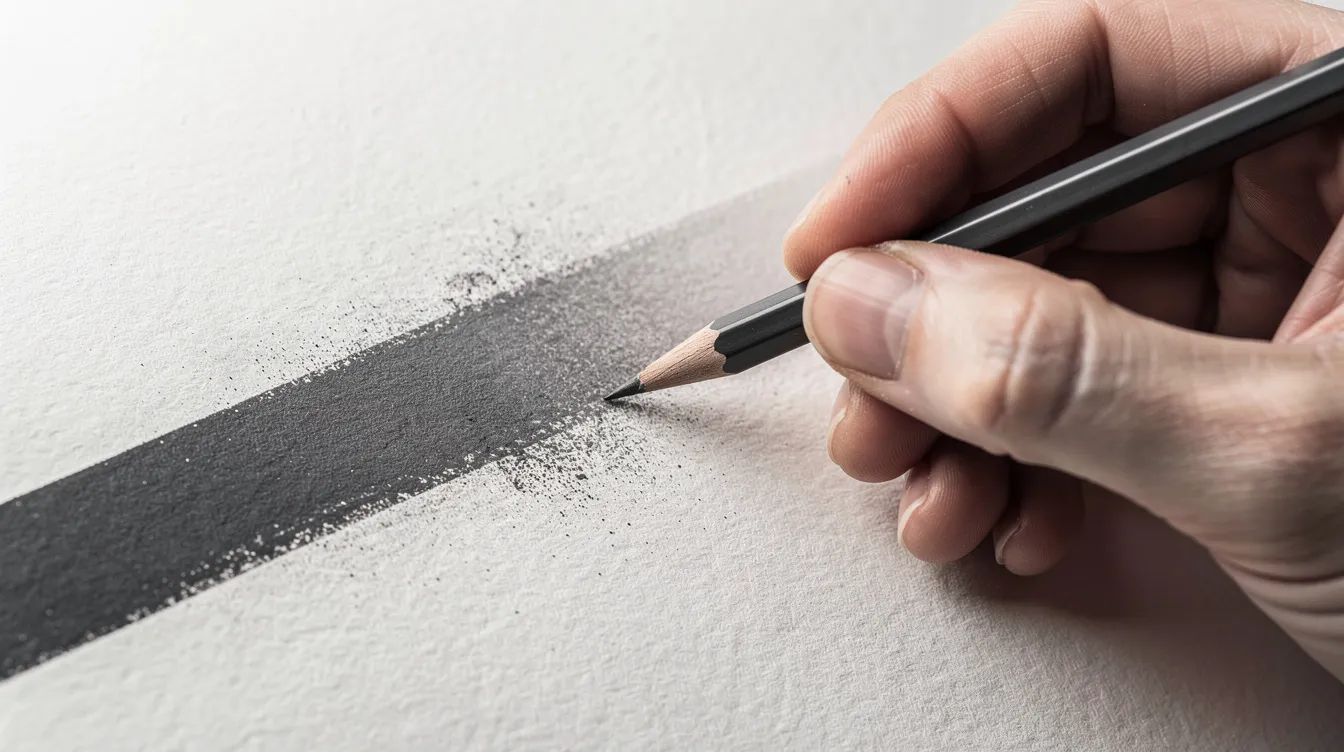
If you are standing in a store with a tester pad, here is a 30-second test: shade a patch to check for scratchy grain, compare 2B and 4B for a clear step in darkness, look at the exposed core for centering, and roll the pencil on the counter to spot warped wood.
Best 7 Drawing Pencil Sets for Beginners
I narrowed the field to seven after removing overpriced, gimmicky, or redundant sets. The list goes from the most balanced beginner choice through more specialized or upgrade picks. All of these are standard graphite pencils, to keep the decision simple for a first set.
1. Staedtler Mars Lumograph Graphite Set (Beginner’s All-Round Favorite)
The blue ones were the pencil I sold most at the shop and the one I still reach for. Mars Lumograph pencils have a range from 10H to 12B, one of the widest grade spans available, though beginners need only a small slice of that whole range. Staedtler Mars Lumograph sets in the 6B to 2H window cover nearly every exercise you will encounter in your first year. The hexagonal barrel is comfortable, the grade printing is legible on multiple sides, and the pencils sharpen cleanly.
Why It Stands Out
The grading across this line is consistent enough that stepping from HB to 2B to 4B produces a clear, visible jump on the page. Many artists I personally feel would agree that this predictable stepping is what makes learning value range so much easier. Even the H grades feel smooth rather than scratchy, and the wood sharpens cleanly. The leads are fairly strong for their grade, so you can push into shading without constant breakage.
Softer grades do develop some graphite sheen under heavy layering, which is normal for any graphite drawing pencil. Staedtler also makes the Mars Lumograph Black line, which uses a carbon-rich formula for darker, more matte tones, worth trying once you want richer shadows without the shine.
Best For
-
Adults returning to drawing and teens serious about learning realism.
-
Anyone who wants one pencil set that can handle both sketching and finished drawings.
Key Strengths
-
Small beginner-friendly sets (for example 6B to 2H) cover most practice needs, and it is widely stocked so single grades are easy to replace.
-
Strong bonded core that rarely snaps in normal handheld sharpeners.
-
Good darks without too much graphite shine, in a comfortable hexagonal barrel that does not roll off the table.
Possible Limitations
-
Costs more than basic school pencils, which may feel like a jump if you are just testing the hobby.
-
Very large sets go beyond what beginners need and tempt people to overspend.
2. Faber-Castell 9000 Graphite Pencils (Precise and Reliable Workhorse)
Faber-Castell’s 9000 range was launched in 1905 and has barely changed its core formula since. Faber-Castell 9000 pencils range from 6H to 8B across 16 grades. The dark green lacquer is instantly recognizable, and the pencils sit at a similar mid-price point to Staedtler. A safe choice for a first year.
Why It Stands Out
The 9000 feels firmer and slightly grittier than the Lumograph at the same grade, which gives a crisper line. If you enjoy fine details, technical drawing, or careful hatching, this matters. The lead is SV-bonded (glued along its entire length to the wood casing), which means it resists breakage when dropped or when you sharpen aggressively. Faber-Castell 9000 series is recommended for its smoothness, though “smooth” here means controlled rather than buttery.
Best For
-
Beginners interested in architecture, urban sketching, or accurate outlines.
-
People who press hard and tend to snap softer leads, or who want a fine point that stays crisp.
Key Strengths
-
SV bonded lead that resists breakage when dropped or sharpened.
-
Readable grade markings and iconic dark green lacquer.
-
Clean, low-dust graphite and a balanced range in even steps, good for value studies.
Possible Limitations
-
Softest grades do not get as dark as some Japanese brands, which can limit very dramatic shadows.
-
Feels a bit dry to people who like buttery, smudgy shading.
3. Faber-Castell Goldfaber Graphite Set (Best Tight-Budget Starter)
This is Faber-Castell’s student line, and it beats generic school pencils by a wide margin without costing pro-level prices.
Why It Stands Out
The Goldfaber line is easy to find at big craft stores, forgiving for heavy hands, and cheap enough that beginners will actually use it daily without “saving it.” That last part matters. If you are worried about wasting a nice pencil, you will not practice, and practice is the point.
I want to contrast these with the unbranded multipacks and plastic-case sets bundled with charcoal, pastels, a pink eraser, and a sharpener for $12. Those sets look like a bargain, but their gritty graphite leaves tiny scratches that make smooth tone nearly impossible. Beginners assume they lack skill when the real problem is the tools and materials. A Goldfaber set fixes that for a similar price.
Best For
-
Complete beginners buying their first non-school pencils, and parents buying a first “real” set for a teen.
-
People who are not sure they will stick with drawing yet and want to spend lightly.
Key Strengths
-
Noticeably smoother than dollar-store pencils while staying affordable.
-
Common starter set includes sensible grades like 2H, HB, 2B, 4B, 6B, and the wood sharpens cleanly in basic handheld sharpeners.
-
Good enough to practice contour drawing, hatching, and basic shading.
Possible Limitations
-
Graphite can feel slightly scratchier in the hard grades compared with premium lines.
-
Limited range means advanced students may outgrow them within a year or two.
4. Tombow Mono Graphite Pencils (For Bold Dark Values)
Tombow Mono 100 pencils were launched in Japan in 1963. The line covers 17 grades; Tombow Mono 100 pencils range from 9H to 6B. The glossy black lacquer with gold foil lettering makes these feel like a treat. They are lovely, but at a beginner’s stage the difference from mid-priced pencils is hard to feel, so save them for later or buy one as a single treat.
Why It Stands Out
The B grades on the Tombow Mono reach deep, satisfying darks without needing huge pressure. The graphite feels silky across smooth drawing paper, which helps beginners see their value range clearly on the page. If you are working on a portrait where dark hair or a dark background needs to read as truly dark, these pencils deliver.
Best For
-
Confident doodlers who want to push into more expressive shading.
-
People experimenting with manga, character art, or stylized portraits where dark values in hair and eyes matter.
Key Strengths
-
B grades that reach deep, satisfying darks without huge pressure.
-
Buttery leads that glide across smooth drawing paper, in an attractive black lacquer that feels “special.”
Possible Limitations
-
Softer grades smudge easily, which can frustrate left-handed beginners. Kneaded erasers help lift graphite gently without damaging paper, but you still need to be careful where your hand rests.
-
Lighter H grades are less of a focus, so ultra-delicate technical work may be trickier.
5. Derwent Graphic Pencils (Soft, Blendable UK Classic)
Derwent has been making pencils since 1832 in England’s Lake District. Derwent Graphic pencils range from 9H to 9B, which is a generous spread. They run a bit softer and smudgier than German counterparts, and they are easy to find in UK shops and big craft stores worldwide. Customers at my shop came back happy after years with nothing but Derwent Graphics. They are the slightly more budget-friendly safe choice.
Why It Stands Out
The soft B grades blend beautifully with blending stumps, tissue, or fingers, which makes tonal studies and loose sketching feel natural. If you enjoy atmospheric landscapes or soft portraits where gradients matter more than crisp edges, these are friendly sketching pencils to start with. Graphite pencils are better for lighter value drawings than charcoal, and the Derwent Graphic sits in a sweet spot between soft enough for rich tone and firm enough for control.
Best For
-
Beginners drawn to atmospheric landscapes or soft portraits.
-
Students in the UK or Europe who want a locally made classic that is easy to replace grade by grade.
Key Strengths
-
Clear grade printing and soft B grades that blend beautifully on cartridge paper.
-
Tins often include an eraser and sharpener, handy for first-time buyers, and they are easy to find in big craft stores.
Possible Limitations
-
Some grades can feel a bit scratchy or inconsistent compared with Staedtler or Faber Castell.
-
Softer leads wear down faster, so beginners will sharpen more often.
6. Koh-I-Noor Toison d’Or Graphite Pencils (Huge Range, Great for Curious Beginners)
Koh-I-Noor Hardtmuth was founded in 1790 in what is now the Czech Republic, making it one of the oldest pencil makers still operating. The Toison d’Or line is their artist’s pencils range, and it covers up to 20 grades. Koh-I-Noor Toison d’Or pencils range from 10H to 8B. The leads are centered and glued along their entire length to reduce breakage, and the California cedar wood casing sharpens cleanly.
Why It Stands Out
The generous spread from very hard to very soft is useful for feeling what a 4H versus a 6B actually does on the page, at good value per pencil. A 12-piece set (5B to 5H) sells for around US$17, which puts it well under $1.50 per pencil. Open stock runs about $1.52 each. For a great pencil that covers a lot of ground, that is hard to beat.
Best For
-
Curious beginners who enjoy testing blending tools and comparing grades.
-
Students starting a formal drawing course that suggests a broad range of hardnesses.
Key Strengths
-
Wide grade selection so you can expand later without changing brands.
-
Leads hold a fine point but still reach strong darks, often at a lower price than German and Swiss competitors. (Caran d’Ache, for example, was founded in 1915 in Switzerland, and their Grafwood line is excellent but pricier.)
Possible Limitations
-
The wide range can overwhelm true beginners. Note that very few artists use the full 9H to 9B span, and three or four mid-scale pencils do nearly everything a beginner needs.
-
Not stocked in every big box craft store in North America, so you may need to order online.
7. Mitsubishi Hi-Uni Graphite Pencils (Luxury Upgrade Once You Know You Love Drawing)
The Hi Uni is a treat-yourself option: 22 grades from 10B to 10H, introduced in 1966, made in Japan with fine-particle graphite. The olive and burgundy barrel with a gold ring looks and feels like something you want to pick up. They cost more, roughly US$25 for a full 22-grade art set or about $1 to $2 per pencil in open stock.
Why It Stands Out
The smoothness across nearly all grades is where these stand apart from other pencils. The soft end produces rich, dark marks with less metallic shine than many mainstream brands. Many artists who try a Hi Uni 4B for the first time describe it as the moment they understood what a soft pencil is supposed to feel like. The hard end is precise enough for fine details and technical outlines.
Choosing pencils depends on your drawing scenario and skill level, and I would not tell a total beginner to start here. But if you have been drawing consistently for a few months and want a set you will keep for years, this is the one.
Best For
-
Beginners who have been drawing consistently for a few months and want a long-term set.
-
Gift buyers looking for a special-feeling set for a new art student.
Key Strengths
-
Extremely smooth graphite with an impeccable finish and color coding that makes grabbing the right grade easy.
-
Very dark B grades with less metallic shine than many mainstream brands.
Possible Limitations
-
Per-pencil cost is high, which is why I do not suggest it as the first purchase for every beginner.
-
Can be harder to find locally, often requiring online ordering.
Quick Comparison of the Best Drawing Pencils for Beginners
If you want the short version, here is each set mapped to a use case:
-
Staedtler Mars Lumograph: Best all-around first set for most adult beginners.
-
Faber-Castell 9000: Best for precise line work and tidy sketchers.
-
Faber-Castell Goldfaber: Best for very tight budgets and “just trying drawing” stages.
-
Tombow Mono: Best for bold darks and character art.
-
Derwent Graphic: Best for soft, blendable shading and UK availability.
-
Koh-I-Noor Toison d’Or: Best for curious beginners who want lots of grades to explore.
-
Mitsubishi Hi-Uni: Best premium upgrade once you know you will stick with drawing.
How to Choose the Right Beginner Drawing Pencils
If all seven options still feel like too much, this section walks you through three decisions. The goal is to leave you with one clear choice, not analysis paralysis.
Choose Based on Your Budget
Rough tiers:
-
Under $15: Faber-Castell Goldfaber set, or 3 to 4 open-stock Staedtler Mars Lumograph or Faber-Castell 9000 pencils in HB, 2B, 4B.
-
$15 to $30: A 6 to 12 grade set of Lumograph, 9000, Derwent Graphic, or Koh-I-Noor Toison d’Or.
-
“I want something special”: A Mitsubishi Hi Uni set, or a mix of Hi Uni soft grades paired with a mid-price line for your H grades.
Open stock beats big tins. Tins look like value, but the extreme grades rarely get used, the middle grades wear down, and you cannot replace one pencil without rebuying the tin. Buying individual pencils lets you pick up three 2Bs if that is the one you wear down. If a store lacks open stock, a six to eight grade set from one of the brands above is a fine compromise.
Even the best pencils look bad on slick printer paper, because graphite needs some tooth. A basic Canson or Strathmore sketch pad is enough. Erasers matter too: a kneaded eraser for lifting light values, a plastic eraser for cleaner removal. These are the blending tools and cleanup tools that make your pencils work properly.
Choose Based on How You Draw (Or Want to Draw)
-
Careful outlines and tiny details: Firmer, precise ranges like Faber-Castell 9000 or Staedtler in mid-hard H grades.
-
Loose sketching and soft shading: Derwent Graphic, Tombow Mono, or the softer end of Koh-I-Noor.
-
Dramatic contrast or stylized portraits: Darker B grades from Tombow Mono, or Mars Lumograph paired with an extra 6B.
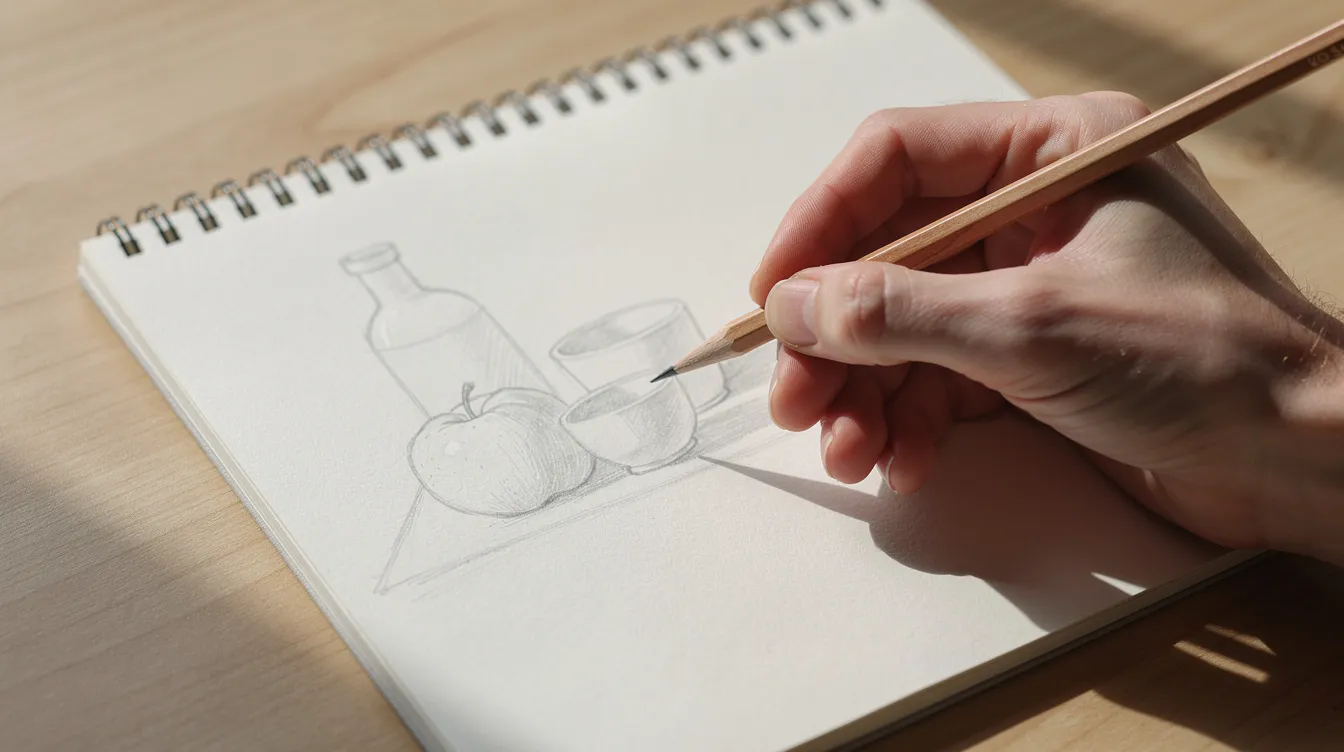
Personal preference develops fast once you start. An architect in his sixties came into the shop drawing only with 2H and HB. For forty years, that was his whole range. He could not see why his precise, pale sketches looked “unfinished.” I sold him a single 4B to try on just the shadows. He came back the next week for three more. The right addition to a small set makes a huge difference, whether you are drawing the human form, a building, or an apple on your kitchen counter.
Experimenting with different brands helps find personal preferences. I recommend buying one pencil from a different line in a grade you already use (for example, a 2B) and comparing it against your current 2B side by side on the same page.
Choose Based on How Serious You Feel About Drawing Right Now
This is not a judgment call; it is a practical one.
For “testing the waters,” pick up a Goldfaber set or three open-stock Lumograph or 9000 pencils. You will spend under $10 and have enough to practice every foundational exercise.
For “I already love this and want to grow,” invest in a Staedtler Mars Lumograph, Koh-I-Noor Toison d’Or, or Mitsubishi Hi Uni set. These give room to explore softer grades and harder grades without switching brands.
Do not delay drawing while hunting for a perfect set. Any of the best pencils on this list will let you learn line, proportion, and shading. Ink, graphite sticks, and charcoal are all worth exploring later, but graphite in a wood casing is the simplest, most forgiving place to start.
Which Drawing Pencils Are Best for You?
If you only read one section, read this:
-
Choose Staedtler Mars Lumograph if you want one set that carries you from first sketches to serious studies.
-
Choose Faber-Castell Goldfaber if your priority is spending as little as possible while escaping school pencils.
-
Choose Faber-Castell 9000 if you love neat, controlled line work and dislike smudging.
-
Choose Tombow Mono if rich darks and expressive shading excite you most.
-
Choose Mitsubishi Hi-Uni if you already draw regularly and want a long-term, premium-feeling set.
The only problem with any of these is not using them. There is no wrong choice here, only what fits how you like to draw.
Final Thoughts
A good pencil set does not make you a good artist. But a bad one can make you think you are worse than you are. Every recommended set above will let you practice line, value, and basic forms. Basic shaping skills are important for building a strong drawing foundation, and you build those by drawing spheres, cubes, and everyday objects, not by owning the right tin.
The crucial step is choosing one small range of grades, sharpening them, and getting graphite on paper regularly. Once you have worn some pencils and erasers down, you will understand your own preferences better than any article can predict.
So pick one set today. Sharpen them tonight. Draw a cup, an apple, a shoe. Let the pencils live on your desk, not forever in the tin.
FAQ
Is HB or 2B better for drawing?
Use both. HB works well for light sketching and outlines. 2B adds darker, softer shading. If you can only buy one, HB is the more versatile start because you can build darker tones by layering, though it takes more passes than a 2B would.
Are Staedtler or Faber-Castell pencils better?
Both are excellent and close in price. Staedtler Mars Lumograph feels a bit smoother at the same grade, while Faber-Castell 9000 feels firmer and crisper. I suggest buying one of each in 2B to compare. After a week of sketching with both, you will know which suits your hand. That comparison alone is worth more than reading ten reviews.
Do I need a whole set of grades from 9H to 9B?
No. Three or four pencils in the middle of the scale do nearly everything a beginner needs. Many artists work with fewer than six grades even on finished pieces. The extreme hard and soft ends are specialized tools you can add one at a time once you know you want them.
Can I use charcoal pencils instead?
You can, but charcoal is dustier, harder to erase, and less forgiving of mistakes. Learn graphite first and try charcoal once shading feels comfortable. Graphite teaches you control; charcoal rewards looseness. They are different tools for different moments, and starting with graphite gives you a foundation that transfers to everything else.